Scratching under the surface
What are ways to unzombify? A person, an institution, an industry.
[The zombie began in Haitian folklore, where it grew out of the brutal history of slavery on French colonial plantations and the Vodou traditions of West Africa. The original zombie was not a flesh-eating monster but a person stripped of will, raised by a sorcerer to labor without rest or freedom, a figure that carried the terror of enslavement and the hope that death might at least bring escape. American occupation of Haiti in the early twentieth century carried the tale north, and Hollywood turned it into the shambling undead of the 1930s. George Romero's Night of the Living Dead then reshaped it again in 1968, making the zombie a relentless, mindless horde and a mirror for social breakdown. Today the zombie stands for our fear of losing agency while still appearing to function: the exhausted worker on autopilot, the consumer driven by appetite, the institution that keeps moving long after its purpose has died. It also captures a collective anxiety about contagion, conformity, and the fragility of civilization, which is why the figure surges back whenever we feel overwhelmed, numbed, or consumed by systems larger than ourselves.]
Well that is brutal and apropos! Something to mull on. I also feel there's a dirt up angle, in the dichotomy I've been developing comparing dirt up and cloud down paths to realizing the potential of AI.
[Zombies are creatures of the earth. They claw out of graves, drag themselves across fields, and rot back into the soil, bound to the ground by weight, decay, and the body's stubborn physicality. Their horror is the horror of burial reversed: what we put in the dirt to rest refuses to stay, and the boundary between the living and the dead turns to mud. Monsters of the clouds and sky, such as dragons, harpies, thunderbirds, and the winged demons of old, belong to a different register of fear. They descend from above as judgment, storm, or predation, and they embody power, wrath, and the sublime, something vast and unreachable that acts upon us from a height. The sky monster threatens with force from outside; the earth monster threatens with what is already within and beneath us. A dragon is a tyrant we might look up to and fight, while a zombie is the slow collapse of ourselves and our neighbors, which is why it fits so well the quiet, creeping dread of systems that decay from the inside.]
The Cloud Emperors and AI overlords have a monster of the sky overtone, striking an increasing similarity to the Targaryens in Game of Thrones with their incredible power and bizarre personal practices.
What might it mean to be slightly monstrous here? I will ponder more and possibly report back.
UPDATE: Is the answer to actually embrace and find empathy for the zombies? I stumbled on an old quora answer of VGR:
Those who claim it has already arrived almost have it right, but not quite.
A zombie is someone who appears to have no inner mental life to you, but appears merely as a predictable pattern of destructive predation, based on a fixed programmed purpose. Unlike vampires who represent an alien but clearly live (if unpredictable and super-) intelligence that has an inner life and can adapt purpose to situation. You cannot reason with a zombie, but you can with a vampire ("if you let me live, I'll lead you to ten others you can drain.")
So a serious answer would be: if you genuinely believe in an ideological us/them distinction of some sort, the zombie apocalypse is already here for you. I call such zombies subjective zombies. To see zombies in others is to be a zombie yourself to "them."
This is because you cannot see or comprehend a zombie's inner mental life. Because it is in your Jungian shadow. But you can see the predictable parts of their psyche, which makes them appear as automatons to you. And vice versa. Your predictable, shadow behaviors, mostly invisible to you, are visible and predictable to "them" and are the reason they are able to dehumanize you into a zombie.
Then VGR Zirp:
So unzombification, at the individual level, is about restoring the capacity to be surprised. Specifically: letting the other person exceed or violate your model of them. That's the "allow them to surprise you" move from [1]. The recovery mechanism is permeability to the unexpected — which is exactly what the zombie archetype forecloses.
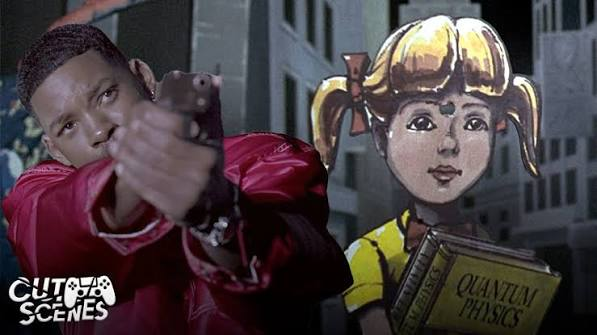
That's a good move to actually approach folks with curiousity. That also reminds me of the epic men in black scene where Agent J, unlike the other candidates, avoids shooting all the aliens because they're just working out and minding their own business.
The institutional level offers much to mull. This aligns with my intuition that getting folks from the office strategically out into the field pays dividends.
For institutions and industries it's structurally similar but the agent is different. An institution zombifies when its predictable, scripted responses fully displace genuine perception of its environment. The "Capitalist's Zombie" post (referenced across [3-8]) frames this as simulation replacing the real thing — the institution goes through the motions of whatever made it valuable without the underlying substance. "Unzombifying" an industry means reintroducing genuine contact with reality: customers who can actually surprise you, problems that don't fit existing templates, failure modes that aren't pre-scripted. Antifragility language applies here — if every shock gets absorbed into existing procedure, the institution is fully zombified. The shocks that break procedure are the unzombification events.The interesting asymmetry: individuals unzombify through receptivity, institutions unzombify through exposure to variance they can't absorb. Same underlying logic, opposite phenomenology.
More to come. Also I have to say I am quite pleased with blygger and the ability to mess around exploring these concepts.
v3
PAtwater