Planeswalking across the fediverse
Earlier tonight, I took my daughter to Trader Joes to pick up groceries for the week. Chatting with the kind bagger man, he mentioned that he had Wednesday and Thursday off. So today was like his hump day. That prompted him to reference a commercial featuring a camel that was a metaphor for hump day, an allusion to the idea of being halfway through the week. I'd never heard of it, and he wasn't suprised. It was on Youtube. We lamented together the lack of shared context these days.
Once upon a time, like a decade and a half or so ago, there was a substrate of shared culture you could count on as most folk in places like an anytown suburb in the States. There were references to movies and shows and commercials that most folk watched, or enough would that you could be confident of something landed. Now we are in the thick of the Divergence machine[1] and everyone has their own carefully curated context. TBH it's taken a bit of work post pandemic to create shared context even among immediate family and close friends.
This post represents the start of a big little experiment into what might exist beyond our world of filter bubbles and the blur of mutually incomprehensible references. I'm posting it on blygger,[2] a new ai native publishing protocol that is fun and thrilling to be messing around in during this early era. And the post is being federated across several key nodes in the fragmented social media landscape relatively automagically. It's a wonderful little implementation of the publish once in a central location and share everywhere paradigm that many successful online creators use.
The internet still functions as a dark forest[3], however, with lots of perils awaiting the unskilled, as well as wonderful amazing potential still to be found. It's a magical world out there.
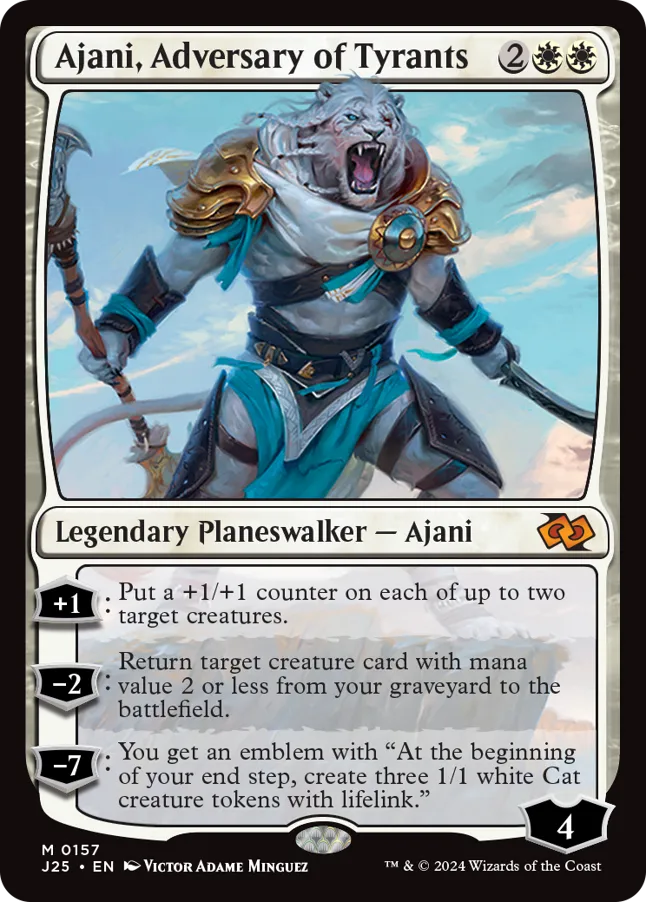
[In Magic: The Gathering, a planeswalker is a rare kind of being born with "the spark," the ability to step out of one world and into another. Most creatures live and die on a single plane, knowing only its customs, its landscape, its stories. Planeswalkers can leave. They travel between realms that run on entirely different rules, from the sprawling city-world of Ravnica to the gothic horrors of Innistrad, and they carry their power with them wherever they go. The spark is often described as a kind of fire, something that ignites a person and lets them move through the multiverse. It's the same flame Prometheus carried: a bit of something powerful, passed across a boundary it wasn't supposed to cross.
That's the image I keep coming back to. The internet is a multiverse of its own, a dark forest of separate planes: Mastodon and Bluesky, newsletters and old-school blogs, forums and feeds, each with its own customs, its own slang, its own unspoken laws. Most of us live on one or two of them. Our references hold only within the borders of our own plane, which is exactly the Divergence machine at work. Crossing over has always been expensive. You'd have to rewrite, reformat, relearn the local etiquette, and show up as a stranger every time.
Blygger lowers the cost of the crossing. I write the post once, in one place, and the protocol carries it out across the planes, so the same flame lands in many different worlds at once. Cross-posting is the spark, in a sense. It makes a single piece of writing a planeswalker, something that can arrive in a strange land, get picked up by people who've never heard of me, and take on a new life in a context I never planned for. Some of those worlds will be zany, some weird, some a little hostile. That's the fun of it. If any shared ground gets rebuilt, I suspect it will happen this way: not by dragging everyone to one plane, but by letting the fire travel.]
I'll end with a final allusion in the spirit of mixing references to different parts of the interdimensional cable I mean the internet. This one is from the great OG work of sci fi Way Station that I recently started on the rec of an old friend. The following quote struck me as a wonderfully alive example of the live and let live spirit that's so critical to cosmpolitinism, classical liberalism and dare I say human civilization.
"Enoch,” Winslowe said, “I like you. I don’t know what you are and I ain’t about to ask, but anyhow I like you.” “I wish that I could tell you what I am,” said Enoch. “Well,” said Winslowe, moving over to plant himself behind the wheel, “it don’t matter much what any of us are, just so we get along with one another. If some of the nations would only take a lesson from some small neighborhood like ours—a lesson in how to get along—the world would be a whole lot better.”
In the blygger spirit,[4] my bots will be back. Like the Terminator. I may even return to these themes like MacArthur. Ok enough mixed metaphors. I've stretched the astral plane far enough. Thanks for reading.
References
[1] [The divergence machine is one of the world machines being sketching out as part of the Protocol Institute's worldmachines.org project, which treats the large, impersonal forces shaping how we live as machines: systems with inputs and outputs that run whether or not anyone is steering them. This one takes in abundance and personalization, with endless streams, feeds tuned to each person, and communities built around ever narrower interests, and it puts out fragmented cultures in place of a shared one. No one has to intend that outcome, since each individual choice is reasonable on its own, but together they erode the cheap, ambient common ground that once let strangers trade references in a checkout line. I don't think the machine is evil or that it can be switched off, so the point of naming it is to see it operating and decide how to live alongside it.]
[2] [Blygger.org is an experimental, AI-native publishing protocol. You write a post once, and the protocol handles carrying it out to the different platforms where people actually spend their time. That makes it a small bridge across the divergence machine's fragments: instead of asking everyone to move to one shared place, which hasn't worked for a long time, it lets a single piece of writing show up in many contexts and tests whether a bit of common ground can be rebuilt from there.]
[3] [The dark forest theory of the internet borrows its name from Liu Cixin's novel The Dark Forest, the sequel to The Three-Body Problem, where the universe is a forest in which every civilization stays silent and hidden because revealing yourself invites destruction from others who see you as a threat. Applied online, it suggests that the open, public web has become a hostile place of bots, trolls, algorithmic noise, and opportunistic attention-harvesting, so many real people retreat to private group chats, newsletters, and gated communities rather than broadcast themselves into the dark.]
[4] Further Reading
The Lost Leverage of Legibility uses the modernity machine, the same world-machines frame behind the divergence machine, to argue that making things countable no longer produces the action it once did. Using potholes and permits as examples, it shows how institutions end up performing readability while the feedback loop to the people who actually do the work goes missing.
Are the much derided Google+ circles an idea whose time finally has come? imagines publishing to a mesoscale audience shaped by a plain-text instruction instead of broadcasting to the open web. It connects directly to the dark forest and cross-posting themes here, since protocols rather than platforms would decide where a post is allowed to travel.
Election 2026 treats blygging as a way to log evolving impressions during an election, and it includes the argument that a platform glitch in Brazil shows why users need control over their own algorithms. That makes it a concrete example of the case for open protocols like blygger as an alternative to curated, divergent feeds.